Another week, another horrific mass shooting in my adoptive country. And so, again, America grieves, while my British friends shake their heads in disbelief, asking: what is it with Americans and guns?
Now, I don't lay claim to any kind of scholarly expertise in American gun culture, but I have lived for the past eight years in Georgia, one of the states with the most lenient gun laws in the country; a state that, in 2014, enacted a piece of legislation known as the "guns everywhere law", which allows firearms to be carried freely in - amongst most other places - government offices, airports, places of worship and school classrooms. On that basis, I have a few thoughts on what it is with Americans and guns.
At the risk of stating the obvious, the first thing to say is that not all Americans feel the same way about the issue; there are numerous anti-gun campaign organisations here. But, as we all know, there is an opposite end to that spectrum. The motivations for the fervent gun-love professed by many Americans, which is not generally regarded as especially niche or eccentric, at least here in the South, seem to be primarily symbolic and sentimental. Some see guns as representing the country's pioneer history, a patriotic symbol of resistance to oppression. They cite (often with a good deal of poetic licence) the Second Amendment of the Constitution, which gives citizens the right to bear arms so they need never be tyrannized again. It can be about class and politics too, with an overt love of firearms a defiant gesture against the big government liberals, a howl for the sanctity of personal freedom, a cry of pride from the rural hunters aimed at the ears of the city-dwelling, soft-skinned educational and professional elites. It's this distinction, or some version of it - this idea of 'two Americas' - that underpins so much of the antagonistic political discourse in this country today.
And it can be personal. The father quietly teaches the son to handle and respect a weapon; the first gun as a rite of passage; hunting trips as a bonding experience enjoyed across a lifetime. Guns as masculinity.
And finally, of course, there are reasons of fear, which have a wider reach. You don't have to be any sort of gun-lover to want to protect yourself or your family, and to wonder whether, in a country overrun with weapons, that requires you to take up arms yourself, however reluctantly. Between the enthusiasts and the anti-gun campaigners, there's a pragmatic space where gun ownership can reasonably seem like a real-world solution to a real-world problem.
So there's pride and patriotism and family and fear, and what's really important to understand is that these feelings are all propped up by a whole industry with a vested interest in perpetuating them. The NRA and the gun manufacturers run a fantastically successful PR operation, so powerful that they manage to whitewash all the facts and figures and maintain a grip on public opinion that prevents the kind of widespread outcry that might actually force legislators into making meaningful change. For as long as public support maintains the awesome power of the gun lobby, only relatively minor adjustments - what politicians like to refer to as "common sense gun safety measures", like universal background checks or tighter restrictions on military-style semi-automatic weapons - seem even theoretically possible. The kind of radical legislation that might bring America anywhere close to a British-style minimal firearms culture feels several worlds away.
Solving America's gun problem simply cannot be impossible, but it would, I fear, require a truly profound change of hearts and minds. Advocates for gun control would need somehow to roar louder than the behemoth pro-gun lobby to convince people that free access to firearms really does cause more death, and that, whatever their reasons for wanting to hold on to their weapons, the loss of all these innocent lives is too high a price to pay. And that might be the easy part. Statistically, it's highly questionable that owning or carrying a gun makes anyone safer but, in the face of fear, we may need more than statistics. In order to shift public opinion, we would have to persuade individuals that, while they may feel safer - may even, it's conceivable, in their particular case, be safer - with a gun than without one, overall we are all less safe with the gun laws that we have in this country, and if we're any sort of society, that's what ought to matter to us most. Ultimately, real change on one inflammatory subject in America may depend on confronting another: the individual versus the collective, the question of the greater good. It may come down to empathy. And if it turns out that Americans simply don't have enough, that'll be one more tragedy.
Sunday, 6 December 2015

Cilmate Change and Terrorism: Which Is the True Existential Threat?
Climate change is "the most severe problem that we are facing today--more serious even than the threat of terrorism".
So said the then UK Chief Scientific Adviser, David King back in 2004.
It's a view that's been echoed by, among others, President Obama in this year's State of the Union address.
Eleven years on, King's comment came to mind as the UK parliament debated and approved air strikes on Islamic State in Syria at the same time as delegates from more than 190 countries were meeting at the UN climate summit in Paris to try to agree a deal to prevent catastrophic climate change.
The Syria vote took up many more column inches than the goings on in Paris despite the presence of world leaders, including Obama and his Chinese counterpart, Xi Jinping, at the opening of the summit.
Polls in Britain about the most important issues facing the World, indicate terrorism is seen as a much greater threat than global warming. It also seems public concern about climate change has declined since the last disappointing key UN climate summit in Copenhagen in 2009.
Why should this be when the scientific consensus is that unless the world takes measures now global temperatures will rise by more than 2 degrees and cause catastrophic changes in the climate that will pose a grave threat to all of humanity?
Some climate scientists think it's partly their fault. They believe they gave people the impression climate change would be more dramatic and also that it may be too late to do much about it. But climate change is likely to be gradual and psychology suggests if people think they can't do much about something, they will most likely carry on as usual.
But political leaders and the media also bear some responsibility.
When there is a terrorist attack, there is frequent talk about terrorism as an existential threat.
Prime Minister, David Cameron, himself has said he believes IS is an "existential threat" to the UK.
According to the dictionary "existential" means "relating to existence". So an "existential threat" to the UK is something that threatens the very survival of the country.
Does the Prime Minister really believe IS poses a threat to Britain's national survival in the same way Nazi Germany did in 1940?
Surely not?
But he is not alone in using this language - other politicians and media commentators have also liberally used the cliché - and it is bound to have an impact on public perceptions.
Anecdotally, I know well-informed people who agree with this assessment of the scale of the IS threat and dismiss climate change as exaggerated - when it is precisely the other way round.
The frog in boiling water is the analogy that's used to explain the lack of urgency about taking action to combat global warming. Then there's the fact that because climate science is developing all the time, there is always an element of uncertainty about it, even if the broad trends are clear.
However, there is already evidence that climate change will disrupt our way of life and threaten the existence of states.
The Pentagon and other defence ministries now recognise climate change as a threat to national security and see it as a driver of conflict.
One of the causes of the unrest that led to Syria's devastating civil war that may well end in the permanent disintegration of the country was prolonged drought and it's very likely climate change was a cause of that drought. It's this research Prince Charles was referring to in a recent interview with Sky News when he grabbed headlines by suggesting a link between terrorism and climate change.
The conflict in Sudan's Darfur region, which the UN estimates has killed around 300,000 and displaced almost 3 million, has also been linked to drought caused by long-term changes in climate.
Another problem when it comes to public perceptions of the two is that while terrorist attacks are sudden and shocking - that is the whole point of them in the eyes of the people carrying them out - climate change is incremental.
We humans also seem to find it far easier to empathise with the relatively small numbers of victims of sudden random violence than we do the large numbers whose lives are threatened by an creeping menace like climate change.
I don't intend to diminish the impact terrorism has on its victims and their loved ones.
If you are unfortunate enough to be in the vicinity of a terrorist attack then it is an existential threat to you.
But, unless you live in a handful of countries like Iraq, Syria, Libya, Nigeria, Somalia or Afghanistan, terrorism is not a threat to the future of your country. It's also not a threat to human existence. Climate change, on the other hand, probably is.
So said the then UK Chief Scientific Adviser, David King back in 2004.
It's a view that's been echoed by, among others, President Obama in this year's State of the Union address.
Eleven years on, King's comment came to mind as the UK parliament debated and approved air strikes on Islamic State in Syria at the same time as delegates from more than 190 countries were meeting at the UN climate summit in Paris to try to agree a deal to prevent catastrophic climate change.
The Syria vote took up many more column inches than the goings on in Paris despite the presence of world leaders, including Obama and his Chinese counterpart, Xi Jinping, at the opening of the summit.
Polls in Britain about the most important issues facing the World, indicate terrorism is seen as a much greater threat than global warming. It also seems public concern about climate change has declined since the last disappointing key UN climate summit in Copenhagen in 2009.
Why should this be when the scientific consensus is that unless the world takes measures now global temperatures will rise by more than 2 degrees and cause catastrophic changes in the climate that will pose a grave threat to all of humanity?
Some climate scientists think it's partly their fault. They believe they gave people the impression climate change would be more dramatic and also that it may be too late to do much about it. But climate change is likely to be gradual and psychology suggests if people think they can't do much about something, they will most likely carry on as usual.
But political leaders and the media also bear some responsibility.
When there is a terrorist attack, there is frequent talk about terrorism as an existential threat.
Prime Minister, David Cameron, himself has said he believes IS is an "existential threat" to the UK.
According to the dictionary "existential" means "relating to existence". So an "existential threat" to the UK is something that threatens the very survival of the country.
Does the Prime Minister really believe IS poses a threat to Britain's national survival in the same way Nazi Germany did in 1940?
Surely not?
But he is not alone in using this language - other politicians and media commentators have also liberally used the cliché - and it is bound to have an impact on public perceptions.
Anecdotally, I know well-informed people who agree with this assessment of the scale of the IS threat and dismiss climate change as exaggerated - when it is precisely the other way round.
The frog in boiling water is the analogy that's used to explain the lack of urgency about taking action to combat global warming. Then there's the fact that because climate science is developing all the time, there is always an element of uncertainty about it, even if the broad trends are clear.
However, there is already evidence that climate change will disrupt our way of life and threaten the existence of states.
The Pentagon and other defence ministries now recognise climate change as a threat to national security and see it as a driver of conflict.
One of the causes of the unrest that led to Syria's devastating civil war that may well end in the permanent disintegration of the country was prolonged drought and it's very likely climate change was a cause of that drought. It's this research Prince Charles was referring to in a recent interview with Sky News when he grabbed headlines by suggesting a link between terrorism and climate change.
The conflict in Sudan's Darfur region, which the UN estimates has killed around 300,000 and displaced almost 3 million, has also been linked to drought caused by long-term changes in climate.
Another problem when it comes to public perceptions of the two is that while terrorist attacks are sudden and shocking - that is the whole point of them in the eyes of the people carrying them out - climate change is incremental.
We humans also seem to find it far easier to empathise with the relatively small numbers of victims of sudden random violence than we do the large numbers whose lives are threatened by an creeping menace like climate change.
I don't intend to diminish the impact terrorism has on its victims and their loved ones.
If you are unfortunate enough to be in the vicinity of a terrorist attack then it is an existential threat to you.
But, unless you live in a handful of countries like Iraq, Syria, Libya, Nigeria, Somalia or Afghanistan, terrorism is not a threat to the future of your country. It's also not a threat to human existence. Climate change, on the other hand, probably is.
An Update From COP 21, Wednesday 2nd December
'Resilience' is the buzz word on day two of the Cities and Regions Pavilion at COP21. Resilience goes far beyond the issue of climate change and our ability to limit its potentially devastating effect on the globe. It is about our ability to handle everything the world throws at us - be it mother nature, the fragile economy or the threat of terrorism, a topic that has a particular poignancy in Paris at the moment.
Bristol - in its usual pioneering spirit - is a founder member of the Rockefeller Foundation's 100 Resilient Cities, a great global project which funds a full time Chief Resilience Officer for the city and supports our resilience planning with consultancy advice and the powerful shared resource that 100 very different cities brings. It means a lot to us, adding to our environmental mission as European Green Capital, so I was delighted to be invited to participate in a Rockefeller moderated discussion hosted by the Kingdom of the Netherlands' within the negotiating 'Blue Zone', including other leading 100 Resilient city mayors, Ahmed Aboutaleb of Rotterdam and Clover Moore of Sydney Australia.
Soon we are on stage with Michael Berkowitz, President of 100 Resilient Cities, sharing the challenges in building resilient cities and our progress to date. A common theme emerges. It's one that's becoming a familiar refrain and still echoed in my ears from the previous evening's panel debate with Mayors from winning European Green Capitals. The sense is that we as cities can do more, but are hampered by a lack of power to act sufficiently without strong national legislation.
However we were able to conclude the session by signing a pledge that will release further funding for investment in city resilience. This commits us to putting at least 10% of our annual budget towards measures which make us more resilient. I was able to do so because we have carried out a preliminary audit that indicates that we can reach 15% in the coming year. This is vital. It protects our citizens, secures our future and sets our long-term trajectory over the next 50 years or more. It touches every aspect of what we do and everyone's life. It's a valuable pledge to make, and a strong outcome from the day.
The Blue Zone houses the high security negotiating area in which 197 countries are attempting to hammer out a global climate deal. Each represented nation has its own 'Pavilion' inside, a grand description of a mix of displays, stages and meeting areas. It is striking - and perhaps a little telling - to see the difference in these, from the functional no-nonsense approach of some, including the workaday office space of the UK pavilion, to the ostentatious peacocking of others. India, for instance, makes a stylish splash with a stunning floor to ceiling water feature, beautiful white robed attendants and the kind of digital screen usually reserved for summer blockbusters - striking an ironic note following Prime Minister Modi's stance on coal fired power.
Back to our Cities and Regions Pavilion, where delegates charge their phones by pedal power! Here we are bringing together leaders of cities and regions with national delegations. French Minister of Environment, Segolene Royal, a star in the French political firmament, brings her message of optimism for an agreement to a session with our fellow Green Capital, Nantes (2013).
It does seem progress is being made. Bringing people together in the way COP does is rare, but following the failures of the past and a greater realisation than ever that the world cannot afford to sit on its hands, there is a spirit of cooperation, hope and commonality.
Bristol - in its usual pioneering spirit - is a founder member of the Rockefeller Foundation's 100 Resilient Cities, a great global project which funds a full time Chief Resilience Officer for the city and supports our resilience planning with consultancy advice and the powerful shared resource that 100 very different cities brings. It means a lot to us, adding to our environmental mission as European Green Capital, so I was delighted to be invited to participate in a Rockefeller moderated discussion hosted by the Kingdom of the Netherlands' within the negotiating 'Blue Zone', including other leading 100 Resilient city mayors, Ahmed Aboutaleb of Rotterdam and Clover Moore of Sydney Australia.
Soon we are on stage with Michael Berkowitz, President of 100 Resilient Cities, sharing the challenges in building resilient cities and our progress to date. A common theme emerges. It's one that's becoming a familiar refrain and still echoed in my ears from the previous evening's panel debate with Mayors from winning European Green Capitals. The sense is that we as cities can do more, but are hampered by a lack of power to act sufficiently without strong national legislation.
However we were able to conclude the session by signing a pledge that will release further funding for investment in city resilience. This commits us to putting at least 10% of our annual budget towards measures which make us more resilient. I was able to do so because we have carried out a preliminary audit that indicates that we can reach 15% in the coming year. This is vital. It protects our citizens, secures our future and sets our long-term trajectory over the next 50 years or more. It touches every aspect of what we do and everyone's life. It's a valuable pledge to make, and a strong outcome from the day.
The Blue Zone houses the high security negotiating area in which 197 countries are attempting to hammer out a global climate deal. Each represented nation has its own 'Pavilion' inside, a grand description of a mix of displays, stages and meeting areas. It is striking - and perhaps a little telling - to see the difference in these, from the functional no-nonsense approach of some, including the workaday office space of the UK pavilion, to the ostentatious peacocking of others. India, for instance, makes a stylish splash with a stunning floor to ceiling water feature, beautiful white robed attendants and the kind of digital screen usually reserved for summer blockbusters - striking an ironic note following Prime Minister Modi's stance on coal fired power.
Back to our Cities and Regions Pavilion, where delegates charge their phones by pedal power! Here we are bringing together leaders of cities and regions with national delegations. French Minister of Environment, Segolene Royal, a star in the French political firmament, brings her message of optimism for an agreement to a session with our fellow Green Capital, Nantes (2013).
It does seem progress is being made. Bringing people together in the way COP does is rare, but following the failures of the past and a greater realisation than ever that the world cannot afford to sit on its hands, there is a spirit of cooperation, hope and commonality.
From Fair Trade to Building Peace: Falling in Love Again at 54
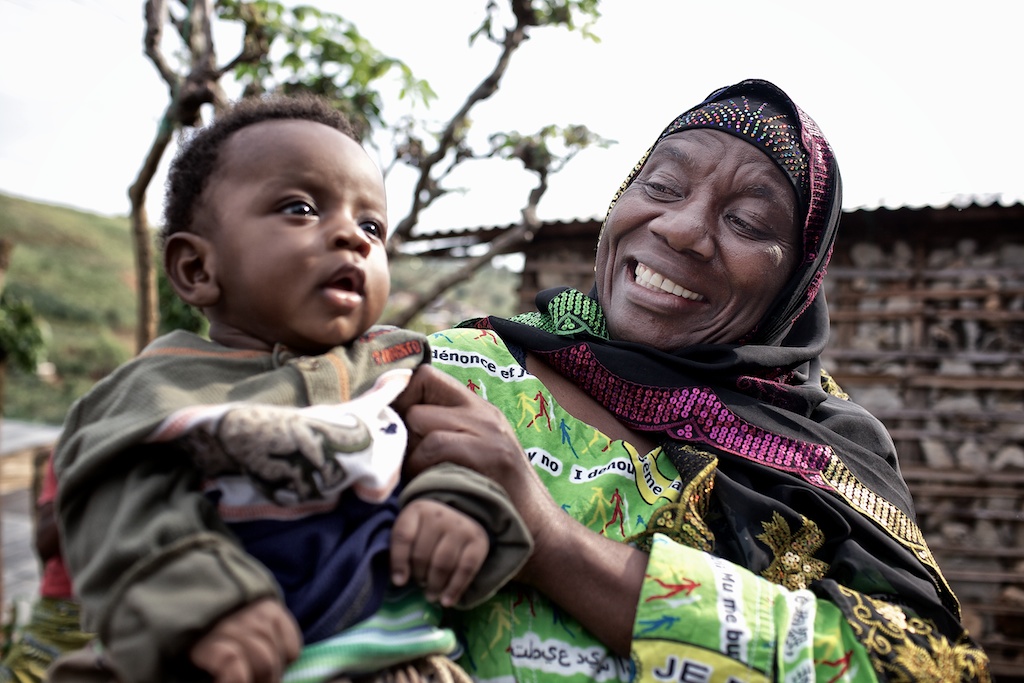
It finally happened: I got the 16 year itch. After so many years of deep involvement with Fairtrade, I was ready to move on. And then I fell in love again - wham, bam, just like that. I saw that peacebuilding organisation International Alert were looking for a new CEO and immediately knew that this was the one for me.
For years I have twittered on to anyone who will listen that tackling conflict, poverty and climate change are the three big issues of our time - and that they are all interconnected. Of course, in Fairtrade our primary focus is on tackling poverty. But I always saw that as connected to tackling conflict. Because as you build economic opportunities, you give people a stake in society, and so help build the economic underpinnings of peace. BBC journalist George Alagiah, a big supporter of Fairtrade, said that having reported on so many wars, it brought home to him that when people have no stake in society, they more easily fall victim to the warlords.
I always remember a cold February morning slogging up to a rather dingy north London Co-operative Supermarket one Fairtrade Fortnight, the annual celebration of Fairtrade in the UK. We were launching the first Fairtrade Palestinian olive oil. Nasser Abufarha is a tough leader of the olive farmers' cooperative, Zaytoun, who constantly face difficulties with the Israelis cutting down ancient olive trees. Zaytoun's farmlands are completely contained within a network of walls, fences and checkpoints, so Palestinian farmers face severe difficulties in marketing their products abroad. So when he saw that first ever Palestinian olive oil on the shop shelf, tears filled his eyes: "This is the first time that I have seen anything positive and normal about Palestine in the UK."
It was a similar story in Colombia, where leaders explained that the coffee trees are the line holding peace - coffee gives the farmers a stake in society, a stake in building and maintaining peace, because they don't need to turn to drugs or crime to feed their families. In the Democratic Republic of Congo (DRC), Twin Trading have done amazing work with women coffee farmers. Previously, families would risk their lives taking their coffee across the border to get better prices. Now they are selling their coffee more directly for a fair price.
Again and again, these are the stories that inspired me at Fairtrade. So when I saw the work of International Alert, I knew that this was where I wanted to focus more directly: on building peace. And what a first few weeks I have had. My inbox has been full of emails from our colleagues round the world: "Bombs went off in Bamako just now. The staff are all ok." "Bombs went off in Beirut." "Suicide bombers in a Nigerian marketplace..."
In fact, since 1990, the zone of peace has grown. There are fewer wars today than at any time since before the First World War, and some would argue fewer than ever. But it certainly doesn't always feel like that - neither here in the UK, deep in debate about whether to bomb ISIS in Syria following the Paris attacks, nor abroad. In the past week, the UK government has brought out a National Security Strategy that included the importance of development and stability overseas, and an aid review that put the focus on building stability in fragile states.
I was recently talking to International Alert's country coordinator for Burundi and Rwanda, Betty Mutesi. She was describing the deteriorating situation in Burundi, where violence broke out in April following the president's announcement that he would remain in office for a third term. In the past eight months, 70,000 Burundian refugees have arrived in Rwanda, Betty told me, and 100,000 people in Tanzania.
"Now is the time that everyone needs to be working in Burundi - if only we had more funds."
A former International Criminal Court lawyer, Betty has been inspired by her work on the ground:
"When you see with your own eyes the difference that a simple reconciliation project can make ... We seek to involve the people from the start, putting them in the driving seat, giving them the space to speak to each other."
With borders a constant flashpoint, International Alert undertook research on the needs of women cross-border traders in Rwanda and the Democratic Republic of Congo (DRC). The women identified the lack of storage for their fresh produce as a major problem. As a result, the World Bank is now building a cold storage there. Likewise, in DRC International Alert trained 300 women traders to better protect their rights and hold customs officials to account. This has resulted in 60% fewer cases of harassment like physical or verbal abuse and extortion.
Traders are beginning to hope that things can change. Maman Chantal from Rwanda explains:
"In the past, it could be difficult for a Rwandan trader to cross to Congo. If you had a problem, no one would help you. Some of us were even afraid to cross. But the other day, a Rwandan trader had an accident in Goma, and the Congolese women took her to the hospital. This never happened before." Maman Bahati from DRC (pictured above) adds: "There is real reciprocity between us. The Rwandan traders need us like we need them. When you have been clients for a long time, you become sisters. Over there in Rwanda, they say 'Turikumwe' - we are one." (Read more about this in International Alert's photo essay, Crossings: The journey to peace.)
In fact, International Alert has long argued on the crucial role of prosperity for building peace - a connection recognised in the UK's new National Security Strategy - and on the need to integrate peacebuilding thinking into economic development. So as well as working at the grassroots, they have also been ready to engage with big corporates, including the notorious extractives industry. Their work from over a decade ago on conflict-sensitive business practices was one of the first of its kind and remains the one of the most widely referenced documents on responsible business operations in conflict areas.
Debating how to influence company behaviour, I am on home ground. But otherwise, the learning curve is frighteningly steep. I blushed as I revealed that I didn't realise people from across the numerous conflict lines in the Caucasus never get to talk to each other - which is why they were sitting down together in our office. One partner with whom International Alert has worked for over 20 years, explained:
"We are so isolated. But we need to have a dialogue to work on conflict-related issues. If we are going to make peace sustainable, we have to expand the circle of people looking for non-violent solutions."
As we start a programme to work with young people in the South Caucasus, she added:
"Democratisation is a very difficult process. No one discusses the values and principles. So we need to develop a political culture, so we can deal with conflict without killing each other."
Another partner, nodding, adapted Churchill as he added:
"Dialogue doesn't always have positive or immediate results. But nothing better than talking has been invented yet."
Again and again in my first few days, I have been so impressed. Next year, 2016, International Alert will mark its 30th anniversary. And our staff, and our partners round the world, have a quiet wealth of this deep, long-term understanding of how to build people's diplomacy; how to build peace. It is never easy. In fact, it is always difficult. Which is why it is so very much needed.
Of course, as time goes by, I am sure to start to see more and more of International Alert's quirks. Certainly over time, my first love may get a little frayed. But just now I am hoping for that wedding ring - made with Fairtrade gold of course.
Photo: © Carol Allen-Storey for International Alert
Leytonstone Tube Attack: Machete-Wielding Man Shouted 'This Is For Syria' Before Stabbing Victim
WARNING: GRAPHIC
A man wielding a machete has stabbed a man and injured two others at what appears to be a terrorist attack at a London Tube station. The suspect reportedly shouted "this is for Syria" and "all your blood will be spilled" during the incident.

Police cordon off Leytonstone Underground Station in east London following a stabbing incident
The attacker is alleged to have slashed a person's throat before injuring two others. One video of the incident posted on Twitter shows a large pool of blood spattered across the ticket hall, and the alleged knifeman gesticulating at two people in the station, lashing out as they approach him. Uniformed police offers arrive and Taser the suspect.
In a second video, the suspect is pinned to the floor by two officers. A man in the background can be heard shouting at him: "You ain't no Muslim bruv." Another film shows terrified commuters, some with children, running away through the station.
The Met Police said they are investigating the attack as a "terrorist incident." The Met's head of Counter Terrorism Command, Commander Richard Walton, said: "I would urge the public to remain calm, but alert and vigilant. The threat from terrorism remains at severe, which means that a terrorist attack is highly likely."
Earlier, a Scotland Yard spokesman confirmed: "Police were called at 7.06pm on Saturday 5 December to reports of a stabbing at Leytonstone Underground station. The male suspect was reportedly threatening other people with a knife. Met officers attended the scene. A man was arrested at 7.14pm and taken to an east London police station where he remains in custody."
The spokesman continued: "A Taser was discharged by one of the Met officers. Officers from British Transport Police are now dealing with the incident at the scene. We are aware of one man having sustained serious stab injuries. We await details of any other injuries."
A man wielding a machete has stabbed a man and injured two others at what appears to be a terrorist attack at a London Tube station. The suspect reportedly shouted "this is for Syria" and "all your blood will be spilled" during the incident.
The attacker is alleged to have slashed a person's throat before injuring two others. One video of the incident posted on Twitter shows a large pool of blood spattered across the ticket hall, and the alleged knifeman gesticulating at two people in the station, lashing out as they approach him. Uniformed police offers arrive and Taser the suspect.
In a second video, the suspect is pinned to the floor by two officers. A man in the background can be heard shouting at him: "You ain't no Muslim bruv." Another film shows terrified commuters, some with children, running away through the station.
pic.twitter.com/srZpJ7rCCI #You ain't no muslim ! credit to the #muslim that shouted that out. #Leytonstone #stabbing we don't want this shit
— Glen Tilley (@Footballtilley) December 5, 2015< Additional footage from scene of stabbing in #Leytonstone tube station in #London - @BigTobzsf
pic.twitter.com/8hIwx8iUcd
— ד 'בן ישראל ☝️ (@_Dahlet_) December 5, 2015#Leytonstone stabbing - another video https://t.co/2IuC1O4f6v pic.twitter.com/LXZctBn6XP via @Philhurley75
— Liveuamap World (@lumworld) December 5, 2015#DontBombSyria - Man in #Leytonstone station stabbing people for #Syria. Like we said bombing Syria = More Terrorism pic.twitter.com/iQMMgABTHC
— Abu Hudhayfah (@AHudhayfah) December 5, 2015The Met Police said they are investigating the attack as a "terrorist incident." The Met's head of Counter Terrorism Command, Commander Richard Walton, said: "I would urge the public to remain calm, but alert and vigilant. The threat from terrorism remains at severe, which means that a terrorist attack is highly likely."
For the rest of today, no service btn Liverpool St and Woodford / Newbury Park due to a police investigation. Severe delays on rest of line.
— Central line (@centralline) December 5, 2015My thoughts are with the victim of the horrific stabbing in Leytonstone. Police were quickly on the scene and have arrested a man.
— Sadiq Khan MP (@SadiqKhan) December 5, 2015Earlier, a Scotland Yard spokesman confirmed: "Police were called at 7.06pm on Saturday 5 December to reports of a stabbing at Leytonstone Underground station. The male suspect was reportedly threatening other people with a knife. Met officers attended the scene. A man was arrested at 7.14pm and taken to an east London police station where he remains in custody."
The spokesman continued: "A Taser was discharged by one of the Met officers. Officers from British Transport Police are now dealing with the incident at the scene. We are aware of one man having sustained serious stab injuries. We await details of any other injuries."
Women in Business Q&A: Kristina Lengyel, VP Global Professional Services, Kronos
As vice president of global professional services, Kristina Lengyel is responsible for driving the strategy to deliver exceptional services to the growing Kronos customer base, while driving high customer satisfaction and loyalty world-wide. She has been a key driver of Kronos' accelerated time-to-value deployment supporting traditional on-premise workforce management customers through cloud transformation while managing a staff of 800+ professionals globally.
Lengyel has been with Kronos since August 2010, and during the first three years she was vice president of engineering responsible for more than 300 engineers across the world. She carried responsibility for Kronos' entire data collections business as well as HRMS and all aspects of iSeries, Stromberg, Efficient, Smart, and TimeLink engineering and product management.
Prior to joining Kronos, Lengyel was the senior vice president of global technical services at Open Solutions and managed more than 300 on-shore and off-shore technical and operations professionals focused on product quality in support of the organization's audacious growth plan. She held several key executive roles at Concerto (now Aspect) Software, the world's largest company solely focused on the contact center industry. Prior to Concerto, Lengyel served as a senior vice president of technical operations and chief technology officer at INSCI Corp.
Lengyel holds a master's degree in business administration from Northeastern University, and a bachelor's degree in computer engineering from Sault Ste. Marie, Ontario, Canada. She was born and raised in Hungary and now lives in Massachusetts with her husband, Geza, and daughter, Aspen.
How has your life experience made you the leader you are today?
This is a difficult question for me to answer, as it's an experience I'd blocked out for years. I am a first generation immigrant - or, a 'successful runaway,' as I prefer to call myself. I left Hungary in 1986 after being rejected from my university of choice because I refused to join the communist party. I decided then that I would not allow others destroy my dream of becoming someone or something - I didn't consent to living the rest of my life feeling inconsequential.
I packed my bag and headed for the unknown. Since I left illegally, I entered a refugee camp in Traiskirchen, Austria - Bundesbetreuungsstelle für Asylwerber - which is still in operation today. Life was hard. Life was scary. Life was uncertain. I officially could not work in Austria, and I refused to become a prostitute like so many other female immigrants. With no discernable skills, I survived on odd jobs. I worked for farmers picking and planting. I cleaned houses and babysat. I stacked firewood, washed dishes, shoveled snow, and cleaned windshields of cars stopped at red lights.
After about a year, Canada granted me a landed immigrant status, so I once again packed my bag.
By 1987 I'd landed in Sault Ste. Marie, Ontario without a single word of English knowledge. In the fall I enrolled at the local college on an academic scholarship, and immediately found myself in a computer engineering classroom full of men. I was the only woman and the only person who could barely express basic life needs in English. It was the start of a professional life dominated by male colleagues, and some very interesting early exchanges gave me even more courage to stay true to myself.
Shortly after graduation I got my first job in a steel mill in Regina, Saskatchewan. Yet again, I was the only woman, the only foreigner, and the youngest on the floor. The mill didn't even have a ladies' room. Still, I loved these people. They were the kindest, most honest, and genuine gentlemen I have ever worked with.
This early adulthood journey taught me a few lessons I live by in my personal and professional lives.
• We always have choices and the choices are our own. Life in the refugee camp was hard, as was life in my new home country. But it was my choice. I chose to leave my homeland and my loving parents. I chose my own path - this path. Even when you are the most desperate, you still have choices, and the easy path may not be the best path. As long as you take charge of your life, the mistakes and the glories are all yours.
• Never take opportunities out of convenience. I had many opportunities during my journey, but I was selectively opportunistic. I knew the path I wanted to take and where I wanted to end up. When an opportunity presented itself, I assessed it and took it only if it kept me on that path.
• Draw the best out of each day - today. Living with uncertainty in my camp days was the hardest. I didn't know what was going to happen next, where I'd end up, how long the deplorable living conditions would last, nor how long I'd be slaving under a miserable person just kind enough to give a day's work for a little money. To maintain my sanity, I forced myself to draw the best out of each day.
• Work is nothing to be ashamed of. I was a spoiled child. I grew up in a loving middleclass family - we didn't know any better than what surrounded us. Ignorance is indeed bliss. Once I decided to take charge of my future, I literally had to earn a living. But despite all the backbreaking and painstaking odd jobs at the refugee camp and during my college years, I was so proud to earn money on my own. Because I'm not ashamed to work hard, I know I can always make a living. I don't experience 'work fear' - the fear of losing my job or my position.
• Don't wait, make the decision. During my early life I had to make some life-defining decisions. Daily work-related decisions often pale in comparison and very few are irreversible - unless, of course, you're a doctor. Don't waste time evaluating the easier decisions. Quickly assess the consequences and the cost of remediation in case the decision is a mistake. Elevate only the most critical and high risk decisions. If the reward outweighs the cost of correction - don't wait, make the decision.
• Colleagues matter. Since I was the only woman at the steel mill and knew very little English, my life would have been miserable if not for my male colleagues. They showed compassion, caring, and concern not only for me, but the work that we were doing together. It proved that a person's level of education or standing in a company has zero bearing on how they treat co-workers. I'm fortunate to work at a company today that embodies these same core beliefs about how employees treat one another.
How has your previous employment experience aided your tenure at Kronos?
My experience working at the steel mill taught me the art of not wasting time. My coworkers were true gentleman, yet direct and extremely hard-working. Therefore, because everything we did was in real time, decisions had to be made quickly, and the guiding principles were always the person's integrity and pride in their work.
All my subsequent jobs provided the necessary experiences to succeed even further at Kronos. Like my belief in drawing the best out of every day, there should be a work take away from each day. These takeaways can be positive and negative. I call them 'my firsts.' At the beginning of my career and to this day I reflect on these firsts before going to bed. My firsts are becoming less profound and more common sense reminders, which helps bring proven best-practices to the forefront of my daily work life.
Fortunately, Kronos is a very nurturing and employee-focused organization. Employee engagement is of utmost importance, and it's a safe environment to take risks because we believe in innovation. So when I reflect at the end of each day, I know I can make changes tomorrow if a risk I took today didn't pay dividends. Kronites know that the right risks bring rewards.
What have the highlights and challenges been during your tenure at Kronos?
Kronos is a fantastic place to work. It's both welcoming and accepting. People are also recognized for their skills, dedication, loyalty, and excellence - not due to a popularity contest. So of course a major highlight was being recognized as a leader at Kronos. But it's not my top highlight. I am most proud of building and nurturing multiple high-performing teams - both from my time heading up global engineering and with the professional services team today. I am very blessed to be able to work with many talented, experienced, smart, capable, and witty people.
My daily personal challenge is proving my self-worth. It is silly when reflecting on my accomplishments, but my own insecurities create a restless desire to accomplish something meaningful and tangible each day. This is not what the organization expects from me, but this is what I expect of myself.
One of my biggest professional challenges is around our organization's cloud technology transformation. As Kronos and our customers aggressively and successfully embrace cloud technology, we must remain loyal to our on-premise [software] customers. The professional services organization I lead continues to undergo our own transition - culturally, operationally, and financially. Reducing the time to value for customers is more relevant than ever, and continuing to drive an enhanced customer loyalty-focus requires a fine balance of emphasis, commitment, and experience to maintain high utilization. In this time of industry transformation, we can never, not even for a second, take our eyes off the ball. It is challenging but exhilarating at the same time.
What advice can you offer to women who want a career in your industry?
Know your stuff! It doesn't matter if you are a woman or a man: you must know your industry and you must know what is expected of you. Knowledge is the foundation of your success. My family always jokes about me being a perpetual student. Well, especially in today's world, you have to be one. You need to be able to keep up with technology advancements, professional services industry evolutions, and our customers' vertical industry shifts and trends as they take place. Find a balance and the right sources of information to make yourself relevant not only today but well into the future. And don't be afraid to demonstrate what you know.
What is the most important lesson you've learned in your career to date?
I live my career with one simple rule: Don't try to read people's minds. Don't do the things you think others want you to do or say You cannot read minds. Employees, especially women, have a tendency to try to please others, and we're often hyper-focused on pleasing our boss or our boss' boss. Stop wasting your time. Do what you think is the right thing to do. Say what you think is the right thing to say! Do your homework, research, prepare, work hard, and focus on solving the business or technical challenges you or the organization is facing. Your own results will bring glory and recognition, not the number of people you please. People will grant you your reward only after you deliver the desired results - not when you temporarily appease their worries.
How do you maintain a work/life balance?
I have two rigid rules for work/life balance that have slightly evolved over time thanks to technology: Have a firm separation between work and life, as well as unbendable time for family activities.
I keep my family in the dark about work. I very, very seldom discuss work at home. I want to be known as Geza's wife and Aspen's mother, or a kind-hearted neighbor, or the volunteer teacher. Kronos is a huge part of me but doesn't describe or define who I am. I have very many wonderful work acquaintances, but only a handful are friends. For those few, work is a taboo subject outside of the office - especially if my husband is present, as I lovingly joke that he can't keep up. Unfortunately you have to work a little harder today at separating your work and personal personas, since so many people try to define you by what pops up on Google or LinkedIn.
I also allocate unbendable time for family activities. For example, when my daughter was young, I worked an obscene amount of hours - sometimes as many as 18-20 hours a day at the Canadian steel mill. However nothing else existed except my family between 6:00 and 8:30 p.m. No calls, no work, no running over the day's event. We played board games, we had bath time, we read, we fought over silly things, we walked, we studied, we ate. When I began managing a global organization serving global customers, conference calls could resume at 8:30 p.m., but not before. This was our time.
We also allocated either a long weekend or a week each year for a mother/daughter trip, a father/daughter trip, a husband/wife trip, and a family trip. Since my daughter is now an adult, we have a different timeslot for our activities, but the rules stay the same. Giving and gaining the undivided attention to and from our loved ones makes a huge difference. Although we spend more physical time with our work family, the quality of time with your real family is what matters. Remember: We are in control of making time for living. Make time for what's important to you and give up those things that offer little value.
What do you think is the biggest issue for women in the workplace?
The biggest problem for women in the workplace is trying desperately to fit in while maintaining their true identity. There's so much talk about equality in the work place that women have a tendency to go above and beyond to become just another employee - or, more frankly, just one of the guys.
We try to talk like men, act like men, and even, as the saying goes, be the man. I was guilty of this in my steel mill days. I dressed like a man. I spoke and swore like a man. I had a buzz cut and even shaved my head few times. Sounds silly, right? It was all in an effort to be perceived as an equal member of the team.
I've learned being equal does not mean being the same. Be yourself and be proud to be a woman. You can achieve equal treatment by producing equal or better results while maintaining your unique identity.
Which other female leaders do you admire and why?
I admire many strong women, but the four that always make my list include:
Margaret Thatcher - Her transformation into a public figure without jeopardizing her values and beliefs are truly commendable. Her ability to make decisions even when she was introducing unpopular policies around welfare, trade unions, and industry privatization is amazing. I loved watching her on TV when I was a young girl. While I have no idea if the Hungarian translations were accurate, her strong presence and elegance mesmerized me at an early age.
Maria Tecla Artemesia Montessori - Her intuition into scientific pedagogy was and still is refreshing. My own daughter is a Montessori kid, starting at two-and-a-half until age 10. I don't just admire her educational methods, but her desire to spread social responsibility. She was the public advocate for education, which included incorporating disabled children into our society. Leveraging all her learnings - from special education to mainstream classroom teachings - to create a responsible and independent society is something I will carry with me for a lifetime.
Eleanor Roosevelt - I absolutely gravitate to her profound intelligence. Who wouldn't? She was an amazingly astute and funny woman. She was also extremely self-aware and had the ability to draw people to herself despite her lack of what some deem modern beauty. You cannot be a leader unless you can entice followers, can you? And of course I love reading her quotes - she had a clever and perceptive phrase for every situation. Some of my favorites are:
• No one can make you feel inferior without your consent (this one's my favorite!).
• A woman is like a tea bag: you never know how strong she is until she gets in hot water.
• The purpose of life is to live it, to taste experience to the utmost, to reach out eagerly and without fear for newer and richer experience.
• People grow through experience if they meet life honestly and courageously. This is how character is built.
Madeleine Albright - I've always admired her wit and ability to maintain her unique identity. Even when I disagree with her politics, her arguments are both entertaining and insightful. In her public appearances she remained mysterious but transparent at the same time - her pins spoke on her behalf. One of my favorite coffee table books is her 'Read My Pins.'
What do you want Kronos to accomplish in the next year?
In the world of workforce management, Kronos is leading the industry migration to the cloud. Cloud technology allows our customers to achieve faster value realization, instant availability of the latest and greatest features and functions, while reducing the burden on their internal IT staff because the solution is managed, scaled, and upgraded by Kronos. Yet while the benefits of cloud and software-as-a-service (SaaS) are clear, shifting the industry mindset about workforce management and how we deliver professional services will be a major focus for the next year and beyond.
Historically, enterprise software was all about the product. But you'll notice there's no 'P' in SaaS. From the customers' perspective, they no longer buy product - they subscribe to a service. The product will remain important, of course, but today's customer is expecting a solution. I want to drive the industry to approach this new SaaS world differently while we take our customers through their cloud journey and deliver the experience they expect and more. We'll teach our customers a new way of thinking and even a new way of speaking (e.g. instead of using NPI for New Product Introduction, we will instead focus on NSI for New Services Introduction; the person who used to be known as a Product Manager will now be the Solution Manager, etc.). We'll also maintain strong relationships with our on-premise customers by providing freedom of choice.
It won't be unlike my early days as a successful runaway: living in a new and unfamiliar world surrounded by a foreign language, but the long term return on investment proved by far that it was the right choice. And for Kronos, it means we can further strengthen our wonderful lifetime partnerships with our superb and loyal customer base.
Lengyel has been with Kronos since August 2010, and during the first three years she was vice president of engineering responsible for more than 300 engineers across the world. She carried responsibility for Kronos' entire data collections business as well as HRMS and all aspects of iSeries, Stromberg, Efficient, Smart, and TimeLink engineering and product management.
Prior to joining Kronos, Lengyel was the senior vice president of global technical services at Open Solutions and managed more than 300 on-shore and off-shore technical and operations professionals focused on product quality in support of the organization's audacious growth plan. She held several key executive roles at Concerto (now Aspect) Software, the world's largest company solely focused on the contact center industry. Prior to Concerto, Lengyel served as a senior vice president of technical operations and chief technology officer at INSCI Corp.
Lengyel holds a master's degree in business administration from Northeastern University, and a bachelor's degree in computer engineering from Sault Ste. Marie, Ontario, Canada. She was born and raised in Hungary and now lives in Massachusetts with her husband, Geza, and daughter, Aspen.
How has your life experience made you the leader you are today?
This is a difficult question for me to answer, as it's an experience I'd blocked out for years. I am a first generation immigrant - or, a 'successful runaway,' as I prefer to call myself. I left Hungary in 1986 after being rejected from my university of choice because I refused to join the communist party. I decided then that I would not allow others destroy my dream of becoming someone or something - I didn't consent to living the rest of my life feeling inconsequential.
I packed my bag and headed for the unknown. Since I left illegally, I entered a refugee camp in Traiskirchen, Austria - Bundesbetreuungsstelle für Asylwerber - which is still in operation today. Life was hard. Life was scary. Life was uncertain. I officially could not work in Austria, and I refused to become a prostitute like so many other female immigrants. With no discernable skills, I survived on odd jobs. I worked for farmers picking and planting. I cleaned houses and babysat. I stacked firewood, washed dishes, shoveled snow, and cleaned windshields of cars stopped at red lights.
After about a year, Canada granted me a landed immigrant status, so I once again packed my bag.
By 1987 I'd landed in Sault Ste. Marie, Ontario without a single word of English knowledge. In the fall I enrolled at the local college on an academic scholarship, and immediately found myself in a computer engineering classroom full of men. I was the only woman and the only person who could barely express basic life needs in English. It was the start of a professional life dominated by male colleagues, and some very interesting early exchanges gave me even more courage to stay true to myself.
Shortly after graduation I got my first job in a steel mill in Regina, Saskatchewan. Yet again, I was the only woman, the only foreigner, and the youngest on the floor. The mill didn't even have a ladies' room. Still, I loved these people. They were the kindest, most honest, and genuine gentlemen I have ever worked with.
This early adulthood journey taught me a few lessons I live by in my personal and professional lives.
• We always have choices and the choices are our own. Life in the refugee camp was hard, as was life in my new home country. But it was my choice. I chose to leave my homeland and my loving parents. I chose my own path - this path. Even when you are the most desperate, you still have choices, and the easy path may not be the best path. As long as you take charge of your life, the mistakes and the glories are all yours.
• Never take opportunities out of convenience. I had many opportunities during my journey, but I was selectively opportunistic. I knew the path I wanted to take and where I wanted to end up. When an opportunity presented itself, I assessed it and took it only if it kept me on that path.
• Draw the best out of each day - today. Living with uncertainty in my camp days was the hardest. I didn't know what was going to happen next, where I'd end up, how long the deplorable living conditions would last, nor how long I'd be slaving under a miserable person just kind enough to give a day's work for a little money. To maintain my sanity, I forced myself to draw the best out of each day.
• Work is nothing to be ashamed of. I was a spoiled child. I grew up in a loving middleclass family - we didn't know any better than what surrounded us. Ignorance is indeed bliss. Once I decided to take charge of my future, I literally had to earn a living. But despite all the backbreaking and painstaking odd jobs at the refugee camp and during my college years, I was so proud to earn money on my own. Because I'm not ashamed to work hard, I know I can always make a living. I don't experience 'work fear' - the fear of losing my job or my position.
• Don't wait, make the decision. During my early life I had to make some life-defining decisions. Daily work-related decisions often pale in comparison and very few are irreversible - unless, of course, you're a doctor. Don't waste time evaluating the easier decisions. Quickly assess the consequences and the cost of remediation in case the decision is a mistake. Elevate only the most critical and high risk decisions. If the reward outweighs the cost of correction - don't wait, make the decision.
• Colleagues matter. Since I was the only woman at the steel mill and knew very little English, my life would have been miserable if not for my male colleagues. They showed compassion, caring, and concern not only for me, but the work that we were doing together. It proved that a person's level of education or standing in a company has zero bearing on how they treat co-workers. I'm fortunate to work at a company today that embodies these same core beliefs about how employees treat one another.
How has your previous employment experience aided your tenure at Kronos?
My experience working at the steel mill taught me the art of not wasting time. My coworkers were true gentleman, yet direct and extremely hard-working. Therefore, because everything we did was in real time, decisions had to be made quickly, and the guiding principles were always the person's integrity and pride in their work.
All my subsequent jobs provided the necessary experiences to succeed even further at Kronos. Like my belief in drawing the best out of every day, there should be a work take away from each day. These takeaways can be positive and negative. I call them 'my firsts.' At the beginning of my career and to this day I reflect on these firsts before going to bed. My firsts are becoming less profound and more common sense reminders, which helps bring proven best-practices to the forefront of my daily work life.
Fortunately, Kronos is a very nurturing and employee-focused organization. Employee engagement is of utmost importance, and it's a safe environment to take risks because we believe in innovation. So when I reflect at the end of each day, I know I can make changes tomorrow if a risk I took today didn't pay dividends. Kronites know that the right risks bring rewards.
What have the highlights and challenges been during your tenure at Kronos?
Kronos is a fantastic place to work. It's both welcoming and accepting. People are also recognized for their skills, dedication, loyalty, and excellence - not due to a popularity contest. So of course a major highlight was being recognized as a leader at Kronos. But it's not my top highlight. I am most proud of building and nurturing multiple high-performing teams - both from my time heading up global engineering and with the professional services team today. I am very blessed to be able to work with many talented, experienced, smart, capable, and witty people.
My daily personal challenge is proving my self-worth. It is silly when reflecting on my accomplishments, but my own insecurities create a restless desire to accomplish something meaningful and tangible each day. This is not what the organization expects from me, but this is what I expect of myself.
One of my biggest professional challenges is around our organization's cloud technology transformation. As Kronos and our customers aggressively and successfully embrace cloud technology, we must remain loyal to our on-premise [software] customers. The professional services organization I lead continues to undergo our own transition - culturally, operationally, and financially. Reducing the time to value for customers is more relevant than ever, and continuing to drive an enhanced customer loyalty-focus requires a fine balance of emphasis, commitment, and experience to maintain high utilization. In this time of industry transformation, we can never, not even for a second, take our eyes off the ball. It is challenging but exhilarating at the same time.
What advice can you offer to women who want a career in your industry?
Know your stuff! It doesn't matter if you are a woman or a man: you must know your industry and you must know what is expected of you. Knowledge is the foundation of your success. My family always jokes about me being a perpetual student. Well, especially in today's world, you have to be one. You need to be able to keep up with technology advancements, professional services industry evolutions, and our customers' vertical industry shifts and trends as they take place. Find a balance and the right sources of information to make yourself relevant not only today but well into the future. And don't be afraid to demonstrate what you know.
What is the most important lesson you've learned in your career to date?
I live my career with one simple rule: Don't try to read people's minds. Don't do the things you think others want you to do or say You cannot read minds. Employees, especially women, have a tendency to try to please others, and we're often hyper-focused on pleasing our boss or our boss' boss. Stop wasting your time. Do what you think is the right thing to do. Say what you think is the right thing to say! Do your homework, research, prepare, work hard, and focus on solving the business or technical challenges you or the organization is facing. Your own results will bring glory and recognition, not the number of people you please. People will grant you your reward only after you deliver the desired results - not when you temporarily appease their worries.
How do you maintain a work/life balance?
I have two rigid rules for work/life balance that have slightly evolved over time thanks to technology: Have a firm separation between work and life, as well as unbendable time for family activities.
I keep my family in the dark about work. I very, very seldom discuss work at home. I want to be known as Geza's wife and Aspen's mother, or a kind-hearted neighbor, or the volunteer teacher. Kronos is a huge part of me but doesn't describe or define who I am. I have very many wonderful work acquaintances, but only a handful are friends. For those few, work is a taboo subject outside of the office - especially if my husband is present, as I lovingly joke that he can't keep up. Unfortunately you have to work a little harder today at separating your work and personal personas, since so many people try to define you by what pops up on Google or LinkedIn.
I also allocate unbendable time for family activities. For example, when my daughter was young, I worked an obscene amount of hours - sometimes as many as 18-20 hours a day at the Canadian steel mill. However nothing else existed except my family between 6:00 and 8:30 p.m. No calls, no work, no running over the day's event. We played board games, we had bath time, we read, we fought over silly things, we walked, we studied, we ate. When I began managing a global organization serving global customers, conference calls could resume at 8:30 p.m., but not before. This was our time.
We also allocated either a long weekend or a week each year for a mother/daughter trip, a father/daughter trip, a husband/wife trip, and a family trip. Since my daughter is now an adult, we have a different timeslot for our activities, but the rules stay the same. Giving and gaining the undivided attention to and from our loved ones makes a huge difference. Although we spend more physical time with our work family, the quality of time with your real family is what matters. Remember: We are in control of making time for living. Make time for what's important to you and give up those things that offer little value.
What do you think is the biggest issue for women in the workplace?
The biggest problem for women in the workplace is trying desperately to fit in while maintaining their true identity. There's so much talk about equality in the work place that women have a tendency to go above and beyond to become just another employee - or, more frankly, just one of the guys.
We try to talk like men, act like men, and even, as the saying goes, be the man. I was guilty of this in my steel mill days. I dressed like a man. I spoke and swore like a man. I had a buzz cut and even shaved my head few times. Sounds silly, right? It was all in an effort to be perceived as an equal member of the team.
I've learned being equal does not mean being the same. Be yourself and be proud to be a woman. You can achieve equal treatment by producing equal or better results while maintaining your unique identity.
Which other female leaders do you admire and why?
I admire many strong women, but the four that always make my list include:
Margaret Thatcher - Her transformation into a public figure without jeopardizing her values and beliefs are truly commendable. Her ability to make decisions even when she was introducing unpopular policies around welfare, trade unions, and industry privatization is amazing. I loved watching her on TV when I was a young girl. While I have no idea if the Hungarian translations were accurate, her strong presence and elegance mesmerized me at an early age.
Maria Tecla Artemesia Montessori - Her intuition into scientific pedagogy was and still is refreshing. My own daughter is a Montessori kid, starting at two-and-a-half until age 10. I don't just admire her educational methods, but her desire to spread social responsibility. She was the public advocate for education, which included incorporating disabled children into our society. Leveraging all her learnings - from special education to mainstream classroom teachings - to create a responsible and independent society is something I will carry with me for a lifetime.
Eleanor Roosevelt - I absolutely gravitate to her profound intelligence. Who wouldn't? She was an amazingly astute and funny woman. She was also extremely self-aware and had the ability to draw people to herself despite her lack of what some deem modern beauty. You cannot be a leader unless you can entice followers, can you? And of course I love reading her quotes - she had a clever and perceptive phrase for every situation. Some of my favorites are:
• No one can make you feel inferior without your consent (this one's my favorite!).
• A woman is like a tea bag: you never know how strong she is until she gets in hot water.
• The purpose of life is to live it, to taste experience to the utmost, to reach out eagerly and without fear for newer and richer experience.
• People grow through experience if they meet life honestly and courageously. This is how character is built.
Madeleine Albright - I've always admired her wit and ability to maintain her unique identity. Even when I disagree with her politics, her arguments are both entertaining and insightful. In her public appearances she remained mysterious but transparent at the same time - her pins spoke on her behalf. One of my favorite coffee table books is her 'Read My Pins.'
What do you want Kronos to accomplish in the next year?
In the world of workforce management, Kronos is leading the industry migration to the cloud. Cloud technology allows our customers to achieve faster value realization, instant availability of the latest and greatest features and functions, while reducing the burden on their internal IT staff because the solution is managed, scaled, and upgraded by Kronos. Yet while the benefits of cloud and software-as-a-service (SaaS) are clear, shifting the industry mindset about workforce management and how we deliver professional services will be a major focus for the next year and beyond.
Historically, enterprise software was all about the product. But you'll notice there's no 'P' in SaaS. From the customers' perspective, they no longer buy product - they subscribe to a service. The product will remain important, of course, but today's customer is expecting a solution. I want to drive the industry to approach this new SaaS world differently while we take our customers through their cloud journey and deliver the experience they expect and more. We'll teach our customers a new way of thinking and even a new way of speaking (e.g. instead of using NPI for New Product Introduction, we will instead focus on NSI for New Services Introduction; the person who used to be known as a Product Manager will now be the Solution Manager, etc.). We'll also maintain strong relationships with our on-premise customers by providing freedom of choice.
It won't be unlike my early days as a successful runaway: living in a new and unfamiliar world surrounded by a foreign language, but the long term return on investment proved by far that it was the right choice. And for Kronos, it means we can further strengthen our wonderful lifetime partnerships with our superb and loyal customer base.
Storm Desmond Forces RTE's Teresa Mannion To Make Wet Plea For People Not To 'Swim In The Sea'
An RTE TV reporter became a viral hit on Saturday, delivering a sodden report from a street in Salthill, Galway, while battered by wind and rain from Storm Desmond.
Approaching the segment as though she were behind enemy lines, under sniper fire and facing imminent capture, Teresa Mannion pleaded with locals not to make “unnecessary journeys” or “take risks on treacherous roads.”
“And don’t swim in the sea,” she shouted at the shaking camera. “Incredibly people have been spotted in the water here in Blackrock in Salthill today and yesterday.”
This is a video purporting to show two boys swimming in the sea at Salthill during the storm:
According to RTE, Mannion made it back to the station uninjured.
Approaching the segment as though she were behind enemy lines, under sniper fire and facing imminent capture, Teresa Mannion pleaded with locals not to make “unnecessary journeys” or “take risks on treacherous roads.”
Live updates on #StormDesmond from Teresa Mannion at Salthill in Galway and Joe Mag Raollaigh at Dublin Airport
Posted by RTÉ News on Saturday, 5 December 2015
“And don’t swim in the sea,” she shouted at the shaking camera. “Incredibly people have been spotted in the water here in Blackrock in Salthill today and yesterday.”
This is a video purporting to show two boys swimming in the sea at Salthill during the storm:
According to RTE, Mannion made it back to the station uninjured.
Fair play to Teresa Mannion of @rtenews. Battling #StormDesmond and still delivering a brilliant report! pic.twitter.com/3lbWcfj8op
— Terryglass Community (@CommunityOfTG) December 5, 2015That poor woman, battered #teresamannion
— Susan Buckley © (@SuBuckley) December 5, 2015Is Teresa Mannion reporting the weather or making a mean and moody pop video? pic.twitter.com/D0vzAJt5fU
— S (@TheShiftyShadow) December 5, 2015Give that woman an Oscar #teresamannion pic.twitter.com/eoI1WVG7rM
— CleerelyNot (@CaoimheCleere) December 5, 2015It looked like Storm Desmond was holding her entire family hostage & their safety depended on how she delivered that report! #TeresaMannion
— Maria McCann (@riacann) December 5, 2015#rtenews #teresamannion I take it all back - the TV licence is worth every cent for a report like that! ☔️
— WarriorPrincess (@cliolmac) December 5, 2015Did that news report really just happen?! #teresamannion #StormDesmond
— Leslie Ann Horgan (@LeslieAnnHorgan) December 5, 2015Jesus @rtenews #Teresamannion is being lashed on pic.twitter.com/7cXGFjmgKb
— gráinne ohagan (@gra5105) December 5, 2015
Subscribe to:
Posts (Atom)